Topkapı or Dolmabahçe? The two palaces compared
Both were the home of the sultans, three hundred years apart. What each one shows you, how long they take, which days they close and how their tickets differ.
Published
Two palaces, two eras
Topkapı was begun by Mehmed II in 1460 and was the court’s home for about four centuries. It grew outward, courtyard by courtyard, in the Ottoman tradition of separate pavilions set in gardens.
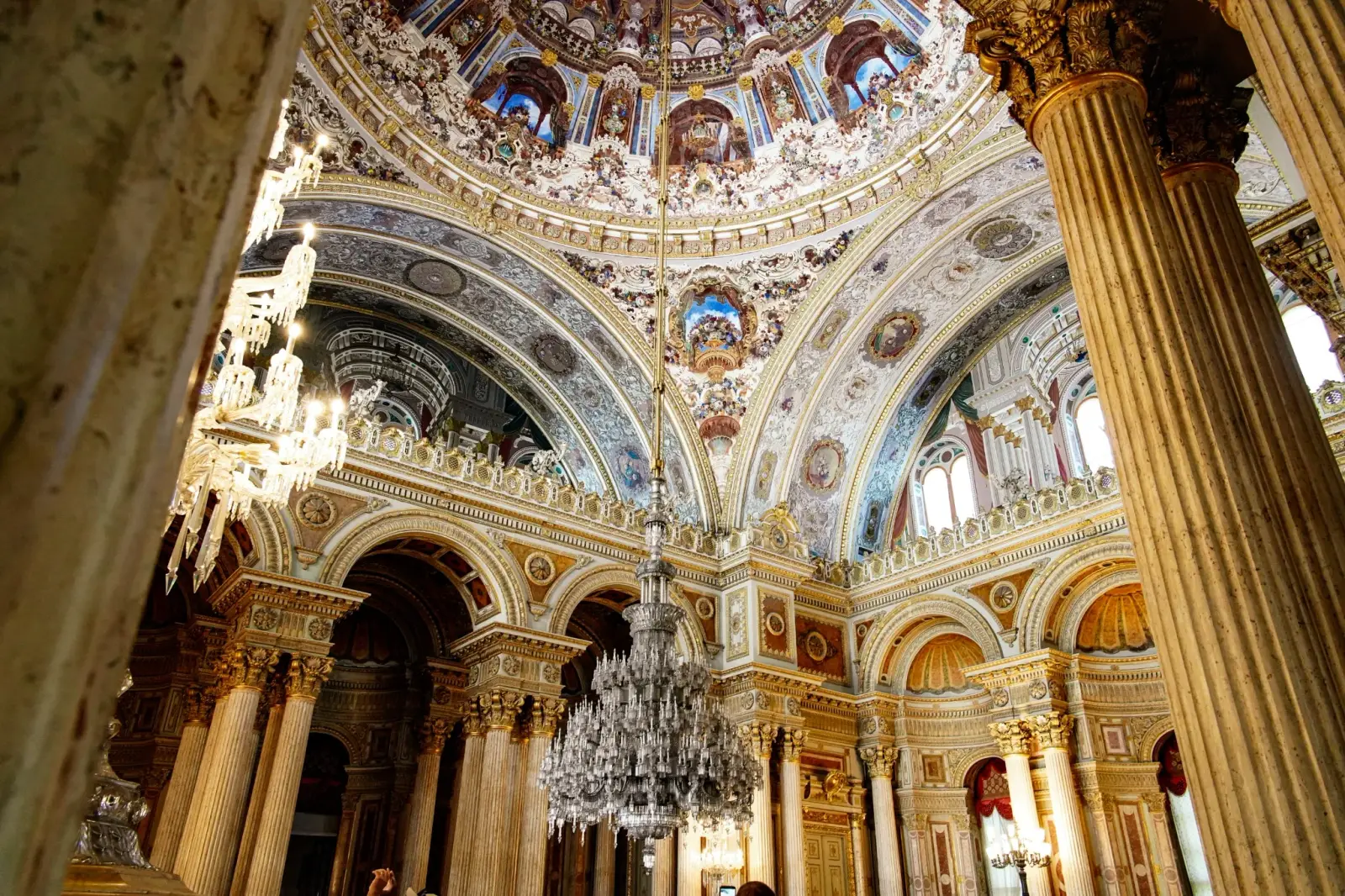
Dolmabahçe replaced it. Built between 1843 and 1856 for Abdülmecid, it put the whole court under one roof on the Bosphorus shore, in a mixture of Ottoman planning and European Baroque, Rococo and Neoclassical decoration.
What you see
At Topkapı you walk between buildings: the council chamber, the Harem’s corridors and apartments, the Treasury, and the terraces of the Fourth Courtyard over the water. Much of what you see is architecture and collections displayed in it.
At Dolmabahçe you walk through rooms that still hold their furniture — the Selamlık with its Crystal Staircase, the domed Ceremonial Hall and the Harem. The visit follows a fixed route.
Days and tickets
Topkapı closes on Tuesdays and Dolmabahçe on Mondays, so no single weekday closes both. Both ticket offices open from 09:00 to 17:00.
Topkapı is not sold on the National Palaces e-ticket system and is excluded from its combined pass; a ticket bought at its gate is valid only that day. The Harem and Hagia Irene are ticketed separately. Dolmabahçe is on the e-ticket system, and its ticket covers the Selamlık, the Harem and the painting museum.
The Müzekart admits its holder to Topkapı’s main palace but not its Harem or Hagia Irene, and to Dolmabahçe except the Selamlık.
Both in one day?
It can be done — the T1 tram runs from Sultanahmet to Kabataş, a short walk from Dolmabahçe — but each palace deserves a few hours. If you have two days, give one to each; if you have one, choose the century you are more curious about.